
Testing the Singapore-Bohra analogy against the historical, economic and social record
What the column argues
Nasheed’s 14 October 2026 Adhadhu column makes five linked claims [1]. First, about 70 per cent of Malé’s population in 1800 was foreign-born or second-generation, a figure he does not source. Second, several Maldivian monarchs had foreign fathers. Third, fear of foreigners is a recent idea spread by rulers protecting their own power. Fourth, Maldivian poverty is tied to advocacy against mixing with others to prosper. Fifth, the Bohra merchants were expelled from the Maldives in 1962, while Singapore gave Bohra merchants land and citizenship and now owes much of its prosperity to them. His conclusion is that further prosperity depends on inviting outsiders to live and earn here. The first two claims are plausible but unsourced. This response tests the last three, which carry the policy conclusion.
The Singapore comparison fails on its own terms
Different starting points. Britain founded Singapore in 1819 as a trading port, and migration built it [2]. Its Bohra community arrived in the late nineteenth century as import-export traders in timber, tin, rubber and spices, one merchant community among several [3]. The Maldives was already a settled, Muslim, self-governing polity. No source located shows that Singapore gave Bohra merchants land or citizenship as a special measure, or that they were the main source of its prosperity.
Singapore is not an open-door state. Since 1973, it has restricted foreign ownership of private residential property [4], and its law ministry describes landed homes as the primary preserve of Singapore citizens, open to selected foreigners only by approval [5]. It caps foreign labour through sector quotas, prices it through monthly levies, and tightened these limits in 2012 even though foreigners already made up about 38 per cent of its workforce [6]. Singapore welcomed foreign labour and talent while the state kept control of land, numbers and price. That is managed openness, not Nasheed’s contrast between acceptance and rejection. The Maldives is not closed either: the 2022 census counted 132,371 foreigners, 25.7 per cent of all residents [7].
What the Bohra experience in the Maldives shows
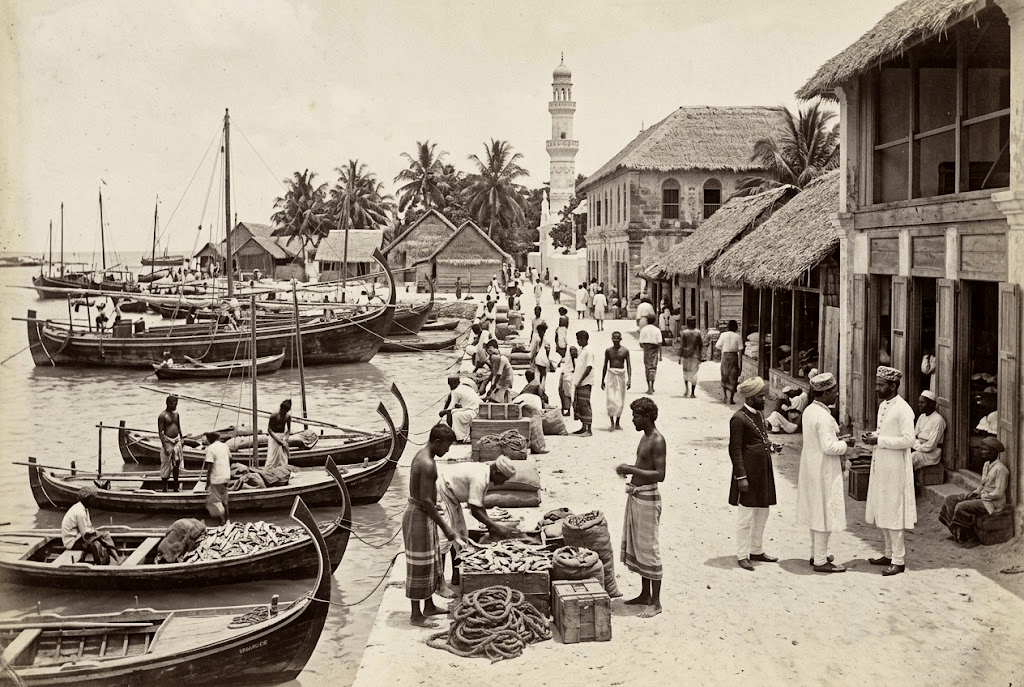
Bohra traders were banned from trading and made to leave on 1 August 1962, after 105 years, in a campaign that began when Nasir became prime minister in 1957 [8]. That is a record of exclusion. But the road to the 1887 protectorate shows a different risk: in 1886 rivalry between the Athireege and Kakaage royal families let Britain intervene in domestic affairs [8]. Nahushal’s peer-reviewed study finds the same pattern across Maldivian history: competing elites seek strategic alliances with outside powers, even though the state has largely kept its sovereignty [9]. Hirschman showed that when trade is concentrated, the stronger partner gains leverage over the weaker [10]. Katzenstein found that small states prosper in open markets by pairing openness with strong domestic institutions [11]. The evidence points to regulated openness, not to either blanket welcome or blanket exclusion.
Outcomes: poverty was not caused by “rejection”
By 2023 the Maldives had the highest GDP per capita in South Asia, had doubled its real income per capita since the early 2000s, and had moved from low- to middle-income status while substantially reducing poverty [12]. Tourism underpins that rise [13]. This growth came decades after 1962, so expelling the Bohra neither explains earlier poverty nor prevented later growth. The present danger is fiscal: public debt rose from 77 per cent of GDP in 2019 to an estimated 123 per cent in 2023, and the World Bank rates the Maldives at high risk of external and overall debt distress [12]. More foreign residents do not solve a debt problem.
Social outcomes of openness without governance
The Maldives already shows what unmanaged openness costs. Bentz estimates 150,000–170,000 migrant workers, about 63,000 of them working illegally, and describes their position as “cheap, docile and disposable” labour [14]. Reporting based on rights-body surveys records recruitment fees of USD 2,500–4,000, debt bondage and overcrowded quarters, and a November 2022 fire in Malé that killed ten expatriates housed above a garage [15]. These harms stem from weak regulation, not from migration itself, which is the point: the Singapore lesson is rules and enforcement.
Timing: why the column reads as part of the Ras Malé debate
This section is opinion based on the public record. Eagle Hills signed its commercial terms agreement on 21 September 2026; the government has decided to lease 500 hectares for 99 years [16, 17]. On 29 September, Nasheed said long-term foreign residency was not inherently wrong but urged the government to submit the contract to Parliament [16]. On 12 October, the housing minister answered public fears that Ras Malé could become a foothold for Zionist settlement and announced planned safeguards [17]. The column appeared two days later. In the available part, it does not mention Ras Malé, and it claims no intent here. But in a week dominated by land, residency and Israel-linked fears, a column praising foreigners’ contribution to Maldivian prosperity will be read in that context.
The public record also supplies reasons for scrutiny. Eagle Hills’ chairman, Mohamed Alabbar, publicly backed UAE–Israel normalisation in 2020 [18]. The Pearl Residence programme was designed with Henley & Partners [19], which has a Tel Aviv office [20]. In a December 2025 interview its chairman called the Maldives the firm’s latest contract and said, of second-home purchases there, “we hope many Israelis will do so” [21]. Israelis are among Henley’s larger client markets, with requests up 166 per cent in 2023 [21]. In Greece, which runs a similar scheme, Israelis rank first among foreign property buyers in Athens and Thessaloniki [22], although only 161 Israelis held Greek golden visas in October 2023 [23]. Parliament rejected a resolution to suspend the Pearl Residence and disclose the Henley agreement [24], and the minister acknowledged that dual nationals could bypass the Israeli passport ban [17]. This is why beneficial ownership, financing and eligibility must be verified independently.
Conclusion
Foreign investment has contributed to the Maldivian economy, and that should be said plainly. Tourism accounted for about 28 per cent of GDP and over 60 per cent of foreign-currency earnings in 2019, with foreign investment concentrated in the sector [25]. Tourism is the largest recipient of foreign direct investment [26], and FDI inflows were 11.4 per cent of GDP in 2024 [27]. Nasheed is right that foreigners have enriched the Maldives. But those gains came mainly through tourism investment, not through long-term foreign residency on reclaimed land beside the capital. In the part of the column available, no data are offered on what migration has delivered to Maldivians, set against the costs documented above.
Against that stands what a small state must safeguard: an Islamic identity of more than eight centuries, and a public that has backed Palestine, as the Israeli passport ban in force since April 2025 reflects [17]. The timing matters. A column of unqualified praise for migration appeared while the Ras Malé terms remain unpublished and Israel-linked fears dominate public debate, and it offers no evidence to answer them.
The risk is best stated conditionally. Eagle Hills’ chairman has backed UAE–Israel normalisation [18]; Henley markets residency programmes to Israelis, and hopes they will buy in the Maldives [21]; and Israelis have become leading property buyers in Greece under a similar scheme, while Greek reporting names Cyprus and Greece as their first-choice safe havens from conflict [22, 23]. If Ras Malé units passed to dual nationals who bypass the passport ban, or if immigration rules were later relaxed and more Israelis settled, public anger would follow, and foreign powers could claim the protection of those citizens. That would repeat the pattern of the Bohra merchants and the British protectorate, or worse, because the Maldives has limited military and security capacity to police a high-value foreign enclave or resist such pressure.
References
[1] Nasheed, M. (2026, 14 October). Beyru meehunnai ekuvun, Dhiveheenge Dhivehikan thanavaskurun [Joining with outsiders, enriching Maldivian identity] (Dhivehi; title translated). Adhadhu. https://adhadhu.com/88355
[2] Turnbull, C. M. (1989). A History of Singapore, 1819–1988 (2nd ed.). Oxford University Press.
[3] National Heritage Board, Singapore. Masjid Al-Burhani. https://www.roots.gov.sg/places/places-landing/Places/landmarks/Civic-District-Heritage-Trail/Masjid-Al-Burhani
[4] Baker McKenzie. Real estate law: Singapore. https://resourcehub.bakermckenzie.com/en/resources/global-corporate-real-estate-guide/asia-pacific/singapore/topics/real-estate-law
[5] Ministry of Law, Singapore. Land policy and administration (Residential Property Act). https://www.mlaw.gov.sg/our-work/land-policy-and-administration-test/
[6] Legislative Council Secretariat, Hong Kong (2015). Foreign manpower policy in Singapore. https://legco.gov.hk/research-publications/english/essentials-1415ise02-foreign-manpower-policy-in-singapore.htm
[7] World Bank (2023). Maldives Human Capital Review, citing the 2022 Population and Housing Census. https://thedocs.worldbank.org/en/doc/e5316790a77abe5d945d921529fe8b24-0310062023/original/Maldives-Human-Capital-Review-Unleashing-People-s-Full-Potential.pdf
[8] Maldives Independent. Maldives independence timeline. https://maldivesindependent.com/?p=115638
[9] Nahushal, I. (2024). Geopolitics in the Maldives: Intersection of foreign relations and internal political rivalries. South Asia Research, 44(2), 230–247. https://doi.org/10.1177/02627280241241546
[10] Hirschman, A. O. (1945). National Power and the Structure of Foreign Trade. University of California Press.
[11] Katzenstein, P. J. (1985). Small States in World Markets: Industrial Policy in Europe. Cornell University Press.
[12] World Bank (2024). Maldives Country Climate and Development Report, Executive Summary. https://documents1.worldbank.org/curated/en/099062724090039631/text/P180529-21276e27-3075-48d1-84f0-3b21caea353f.txt
[13] World Bank (2026, April). Maldives Macro Poverty Outlook. https://thedocs.worldbank.org/en/doc/5d1783db09a0e09d15bbcea8ef0cec0b-0500052021/related/mpo-mdv.pdf
[14] Bentz, A.-S. (2021). Maldives’ migrants. Fondation Pierre du Bois, No. 3. https://www.fondation-pierredubois.ch/wp-content/uploads/2021/03/2021-no3-Bentz.pdf
[15] Edition.mv. Migrant workers in the Maldives (feature). https://edition.mv/features/53675
[16] One Online (2026, 29 September). Nasheed urges Government to submit Rasmalé contract to Parliament. https://oneonline.mv/en/126382
[17] Sun Online (2026, 13 October). Minister: Israelis and Israeli-controlled entities will be barred from owning property at Rasmale’. https://english.sun.mv/109497
[18] Kempinski, Y. (2020, 13 December). Arab billionaire: Family unity before business. Israel National News. https://www.israelnationalnews.com/news/292992
[19] Adhadhu (2025, 6 November). Maldives Pearl Residence investment program announced. https://adhadhu.com/74948
[20] Henley & Partners. Israel office; Israeli citizenship by descent. https://www.henleyglobal.com/contact/office-israel
[21] Domke, R. (2025, 28 December). If someone contributes to a country, why not grant citizenship? Israel could offer golden visas too (interview with Christian Kaelin, chairman, Henley & Partners; copy accessed via chriskalin.com, original outlet not identified). https://chriskalin.com/storage/app/uploads/public/69c/50b/711/69c50b7110317422478967.pdf
[22] Greek City Times (2026, 7 January). Israelis, Turks and Lebanese biggest buyers of Greek property. https://greekcitytimes.com/2026/01/07/israelis-turks-and-lebanese-biggest-buyers-of-greek-property
[23] Greek City Times (2023). Israelis seek safety in Greece with a golden visa (https://greekcitytimes.com/?p=286363); Israelis seeking safe havens (https://greekcitytimes.com/?p=282704).
[24] Atoll Times. Parliament votes down call to halt investor residency scheme. https://atolltimes.mv/post/news/16873
[25] U.S. Department of State (2019). 2019 Investment Climate Statements: Maldives. https://www.ecoi.net/de/dokument/2031881.html
[26] Ibrahim, M. I. (2024). Determinants of foreign direct investment in the Maldives: A multiple regression analysis. Maldives National Journal of Research, 12(2), 69–78. https://saruna.mnu.edu.mv/handle/123456789/16041
[27] World Bank, World Development Indicators: foreign direct investment, net inflows (% of GDP), Maldives, as reproduced by Statistics of the World. https://statisticsoftheworld.com/country/maldives/fdi-inflows


Leave a Reply