History has a way of repeating itself.
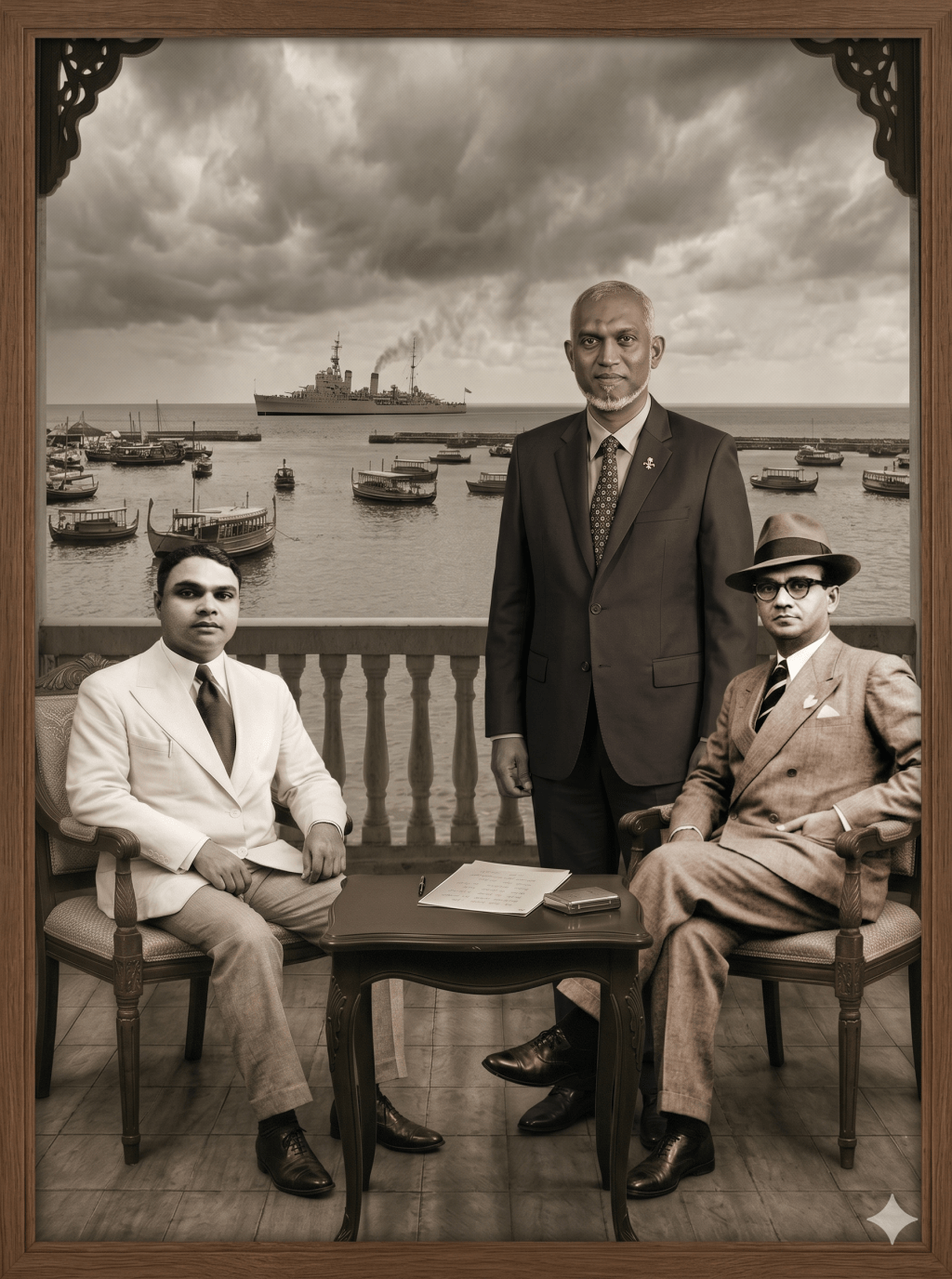
During World War II, the Maldives, then a British protectorate, depended almost entirely on maritime trade for food, fuel, and basic goods. When global shipping routes were disrupted by war, the consequences were severe: rationing, starvation-linked deaths in the outer islands, and eventually the Northern Uprising of 1943 to demand change. When the war started in 1939, the government struggled to act fast enough; they were focused on the kingdom’s power struggle, while foreign Bora merchants, who controlled the majority of import and export trade in the Maldives, resisted price controls and allowed the buying prices of dried fish and other products to collapse. Relief from Britain was nowhere to be found, as Britain focused instead on war strategy: establishing its base in Addu and outposts in Dhoonidhoo and Kelaa, which fell on the Maldivian government budget, further draining the very resources needed to feed its own people. The cost was borne entirely by ordinary people. While leadership rotated from one man to another, those in power controlled all food supplies.
The lesson was not that the war was unforeseeable; it clearly was. The lesson was that a fully import-dependent island economy has almost no buffer when global trade breaks down. Slow responses and the absence of domestic food production or strategic reserves turned a manageable hardship into a crisis.
Today, the parallels are worth examining seriously.
The Strait of Hormuz, through which roughly 20% of the world’s seaborne oil supply normally passes, has been effectively closed since late February 2026 following the US-Israeli conflict with Iran. The Maldives has already seen fuel prices rise 18–26% this year. The government has announced plans for a strategic fuel reserve, a welcome step, but one that comes as the crisis is already underway.
Beyond fuel: the Arabian Gulf accounts for approximately 20% of global seaborne fertiliser exports and 46% of global urea trade. A prolonged disruption will push food production costs higher globally, reaching import-dependent nations like the Maldives through higher food prices and tighter foreign exchange.
And the Maldives enters this moment in a structurally weak position. Public debt stands at around 127% of GDP. Fitch rates Maldivian sovereign debt at CC, “junk,” with a probable default event still on the table. Usable foreign reserves remain below one month of imports.
None of this is insurmountable. But it requires urgency, honesty, and the kind of long-term planning that history shows is easy to defer when politics gets in the way. The 1943 uprising didn’t happen because the people of the Maldives were ungovernable. It happened because slow decisions and inadequate preparation allowed a crisis to become a catastrophe.
Democratic accountability doesn’t require perfect governance; it requires honest governance. Leaders who acknowledge risk clearly, act before the shortage arrives, and place the resilience of this nation above the politics of the moment.
If the present leadership lacks the vision or the plan to navigate this period as the war risks expanding and global supply chains remain fractured, then the most patriotic thing they can do is step aside. Not as a defeat, but as an act of national duty. Make way for those with the knowledge, the strategy, and the urgency that this moment demands.
The people of the Maldives have endured preventable crises before. They should not have to endure another.


Leave a Reply