Before World War II, global powers asserted dominance through military conquest, seizing territory and resources from smaller states to expand empires. After World War II and especially after the Cold War in the 1990s, this shifted toward neo-imperialism, where economic pressure, diplomatic leverage, and international institutions like the IMF, World Bank, and WTO became tools of influence. While military interventions continued in some regions, economic and political mechanisms largely replaced direct conquest.
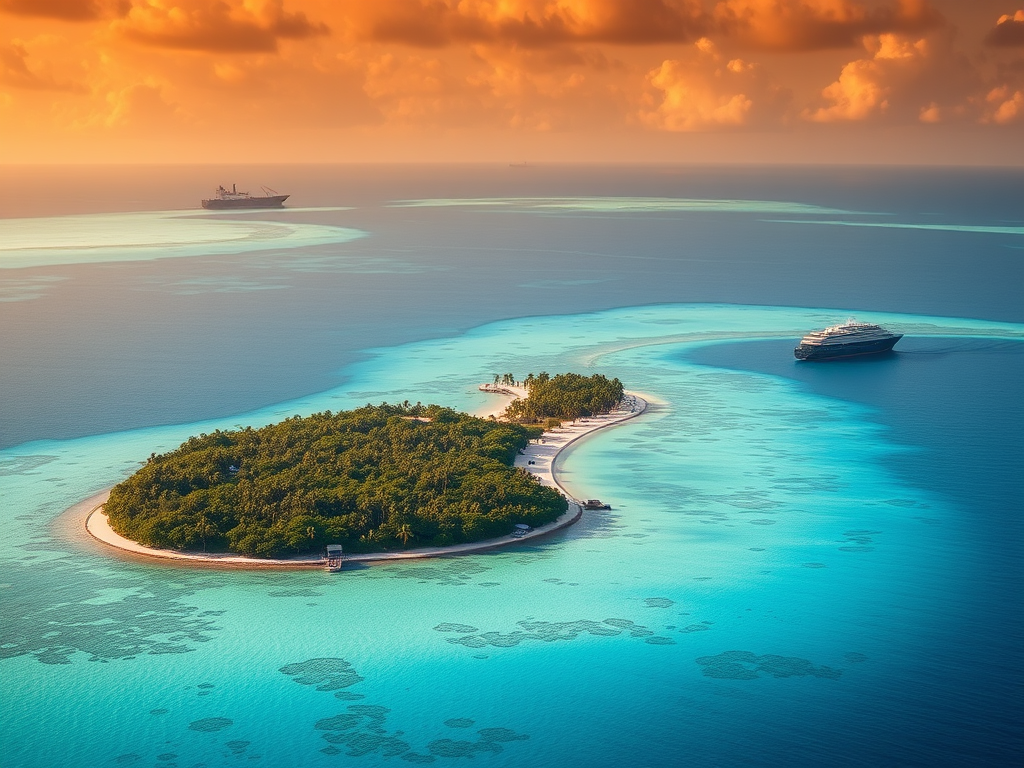
Today, major powers such as the United States, the European Union, and China shape the global order through economic strength, strategic alliances, and dominance in multilateral institutions. Small island nations like the Maldives are particularly vulnerable, with their limited resources and strategic locations making them targets for influence. In many cases, aid and loans come with policy conditions that reflect donor interests. This article explores how the Maldives navigates these pressures, balancing sovereignty with economic survival, and proposes pathways for greater autonomy.
Historical Foreign Influence
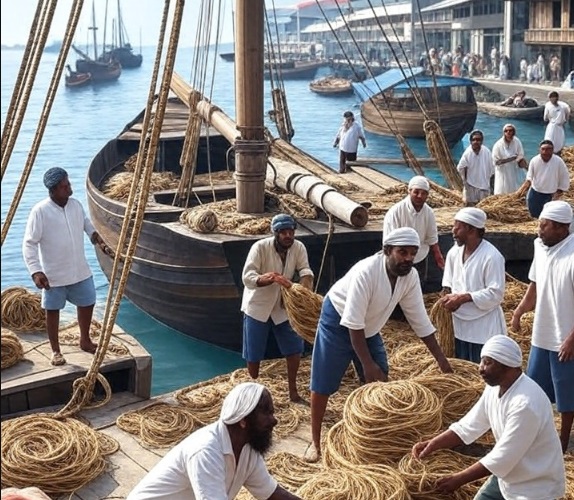
The Maldives’ location in the Indian Ocean has long attracted foreign interest. In the late 15th century, the Ali Rajas of Cannanore’s Arakkal Kingdom dominated trade, exporting coir and dried fish while importing silk, rice, and pottery. The Portuguese occupied Malé from 1558 to 1573 (Malony, 1980), followed by a brief occupation of Malabar from December 20, 1752, to March 9, 1753 (worldstatesmen.org, n.d.). Through Ceylon (modern-day Sri Lanka), the Dutch East India Company influenced Maldivian trade in the 17th century. (GlobalEDGE, n.d.). The British ousted the Dutch in 1796 and established a protectorate in 1887, controlling the Maldives’ foreign affairs and defense until independence in 1965.
In 1857, Shia Muslim Bora merchants from Bombay established a commercial presence in Malé. (Wilkinson, 2010), dominating imports and exports by 1903 and influencing local politics until their deportation in 1962. In 1956, the British secured a 100-year lease for a military airbase in Gan (Addu Atoll), solidifying their regional presence. Economic neglect of the southern atolls and tensions over the lease fueled the United Suvadive Republic movement (1959–1963). The British presence limited the Malé government’s ability to respond, thereby challenging national unity. When the Maldives gained independence on July 26, 1965, the British soon after created the British Indian Ocean Territory (BIOT), detaching the Chagos Archipelago from Mauritius. Some speculate that Addu Atoll was considered for inclusion in the BIOT due to its strategic value, though direct evidence remains lacking.
Post-Independence Challenges
Following independence, the Maldives faced significant challenges stemming from limited economic resources, inadequate infrastructure, and a weak banking system. Decades of foreign influence had delayed autonomous development, while limited diplomatic engagement further constrained economic growth. The state lacked the administrative, security, and defence capacity to respond to internal and external threats, most notably during the 1988 terrorist attack on Malé, which required Indian military intervention to restore stability.
At the core of these struggles was the absence of technical capacity within the government to formulate a comprehensive economic development plan. The lack of a functional governance system hindered citizen-centric, democratically informed decision-making. Development priorities were often top-down and disconnected from the lived realities of the population, keeping the country from pursuing visionary initiatives or building the necessary institutions and infrastructure to support long-term growth.
At the time, the Maldives lacked a university or higher education institutions, and its public education system lagged significantly behind regional peers. In contrast, when the British withdrew from neighbouring colonies like India and Sri Lanka, they left behind functioning administrative systems, legal institutions, defense structures, and police services. The Maldives, by comparison, was left to rebuild from a far weaker foundation both institutionally and educationally, which continued to shape the trajectory of its development for decades.
The Evolution of Tourism: From Local Roots to Global Reach
In 1965, a UN mission deemed the Maldives unsuitable for tourism due to its isolation and lack of infrastructure. Yet in 1972, tourism began with the launch of Kurumba Maldives. The “one island, one resort” model expanded rapidly after the 1978 political transition. By the 1990s, the number of tourist beds had exceeded 10,000, and growth was fueled further by safari yachts and luxury resorts. Tourism soon became the economic backbone, contributing to rising incomes, life expectancy, and literacy.
In 2009, the government relaxed restrictions to allow guesthouses on inhabited islands, spurring community-based tourism. Tourist arrivals grew from 1.2 million in 2015 to 1.5 million in 2016. By 2024, arrivals reached 2.05 million an 8.9% year-on-year increase generating US$5.6 billion, with occupancy rates averaging 71.2% (50% off-peak, 95% peak).
Until 2010, the Maldives operated effectively as a tax haven. After the 2008 elections, the new government introduced taxation, increasing public revenue from MVR 5 billion in 2008 to MVR 23.1 billion in 2024. Foreign direct investment (FDI), mainly in the tourism sector, continues to dominate, with over 90% of resorts operating under FDI structures following policy updates in 2020.
Economic Challenges and Opportunities
Tourism’s share of GDP rose from 10–15% in the 1980s to 25–30% in the 2000s. Today, 33% of government revenue comes from tourism-related taxes and fees. However, structural vulnerabilities persist. The trade deficit has widened, with imports outpacing exports by US$3.3 billion in 2024, compared to US$1.4 billion in 2008. Foreign currency reserves dropped to US$43.7 million in July 2024, before recovering to US$708.1 million by January 2025, primarily due to a US$400 million currency swap with India. This volatility exposes a fragile economy. The black-market exchange rate for the U.S. dollar reached MVR 19.75, a 28% premium over the official MVR 15.42, indicating a dual economy where foreign-owned tourism thrives while Maldivians struggle with currency shortages.
The Maldives’ debt, at 113% of GDP in 2024, is fueled by large infrastructure loans, most notably from China under the Belt and Road Initiative, and other bilateral and multilateral lenders. Foreign policy compromises, such as cutting ties with Iran (2016) and Qatar (2017) to align with Saudi Arabia, secured financial backing but harmed relations with other nations. These echo past concessions, like the British protectorate era.
Speculation over a 2015 letter to Malta exploring the lease of Haa Alif Uligam for weapons storage, support for Mauritius on the Chagos issue, and the 2023 Samoa Agreement with the EU, all suggest a pattern: aligning with stronger powers for short-term gains, often at the cost of sovereignty. Gaining citizen support for such policies remains difficult, especially amid centralisation and marginalisation. Transparent public campaigns involving local leaders are crucial for fostering understanding and trust.
Diversification: The Path Forward
The Maldives’ history of sea-based trade and fishing offers a blueprint for diversification. Transhipment harbours in Addu and Haa Alif could generate over US$1 billion annually and create more than 10,000 jobs. Developing international transit airports in Gan and Hanimaadhoo could add another US$500 million in economic activity.
Expanding shipping businesses, investing in small-scale manufacturing, and revitalizing agriculture and fisheries would improve food security and reduce dependence on imports, including basics like coconuts, once a symbol of national pride.
Conclusion
The Maldives stands at a crossroads. From colonial subjugation to modern-day economic dependence, it has long navigated the pressures of global power dynamics. While tourism has driven economic gains, over-reliance on a single sector, combined with rising debt and foreign currency shortages—has left the economy vulnerable.
To secure a more sovereign and sustainable future, the Maldives must leverage its strategic location and historical strengths in maritime trade and fisheries. Diversifying the economy through transhipment harbours, regional transit hubs, and localised industries is essential, not just for growth, but for resilience.
Above all, these efforts must be citizen-centric, transparent, and inclusive, addressing regional disparities and empowering local communities. We must build a governance model that reflects our identity and values. The Maldives can be developed and governed through Islamic principles while embracing a democratic socialist focus, combining faith and fairness to build a just, equitable, and self-reliant nation.
References
GlobalEDGE. (n.d.). globaledge.msu.edu. Retrieved from globaledge.msu.edu: https://globaledge.msu.edu/countries/maldives/history?
Malony, C. (1980). People of the Maldive Islands. Orient Longman.
Wilkinson, R. (2010). Colonial Imaginaries and Postcolonial Transformations: exiles, bases, beaches. researchgate.
worldstatesmen.org. (n.d.). http://www.worldstatesmen.org. Retrieved from http://www.worldstatesmen.org: https://www.worldstatesmen.org/Maldives.htm?
 PUBLIC FINANCE AND ADMINISTRATION IN MALDIVES
Leave a comment